Does Formula Milk Expire? What Parents Need to Know
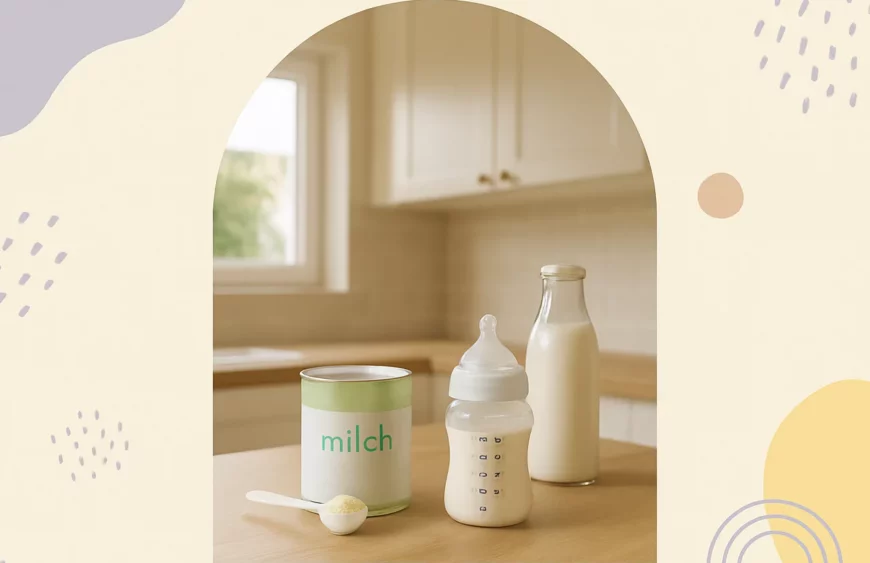
This image was generated using AI.
An opened tin has been sitting in the cupboard for weeks, the date on the base is barely legible, and your baby is hungry. In moments like these you do not want lengthy research, you want a clear answer. We have gathered everything you need to know about the shelf life of formula milk and how to tell when a pack no longer belongs in the bottle.
- Yes, formula milk does expire. Every pack carries a best before or use by date.
- Once opened, the period stated by the manufacturer on the tin also applies.
- Store it dry, cool and tightly sealed. The fridge and the bathroom are unsuitable.
- Made up milk keeps for a very short time only, and leftovers in the bottle are thrown away.
- When in doubt: discard rather than risk it.
Does formula milk really expire?
Yes. Formula powder is a food and, like any other, carries a date up to which the manufacturer guarantees its quality. On unopened packs you will usually find this date on the base of the tin, on the carton or on the sealing foil.
The date refers to unopened, correctly stored products. As soon as you open a pack, a second and much shorter period begins that runs independently of the printed date. So you need to consider both pieces of information together.
It is important to distinguish between powder and ready to feed formula milk. Ready to feed bottles and cartons are often stable for longer while unopened, but they are particularly sensitive once opened. In both cases, what counts is the information the individual manufacturer gives on the packaging.
Understanding best before and use by dates
The best before date tells you how long the product will keep its typical properties when stored correctly. That includes flavour, solubility and the level of added nutrients. Vitamins in particular can decrease over time, which is exactly why the date on infant formula and follow-on formula is more than a formality.
A use by date is stricter. It appears on perishable products and marks the point after which you should no longer use the product. For babies this matters more than it does for adults, because their immune system is not yet fully developed.
If you are unsure how to read a pack, take a look at our guide to understanding baby food labels. There we explain the details you will find on tins and cartons.
Discover our organic baby formula

HiPP Dutch Organic Combiotic Stage 2 – Follow-On Formula
$62.38 / kg


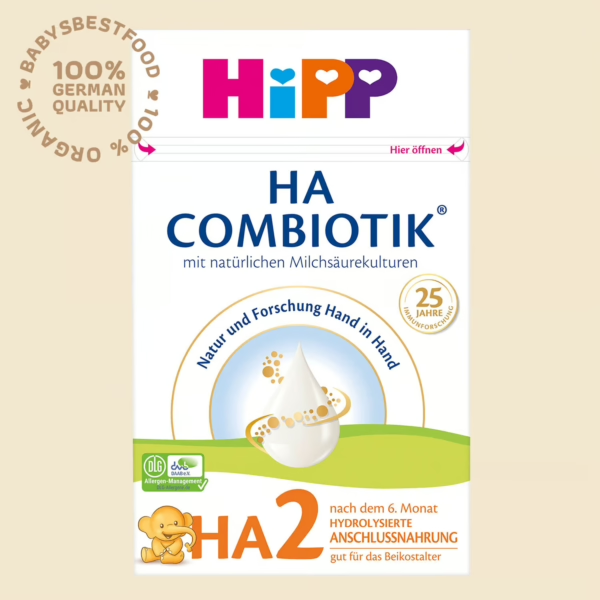
HiPP 2 HA-Combiotic – Hypoallergenic Follow-on Formula
$69.83 / kg


How long does an opened tin of formula powder last?
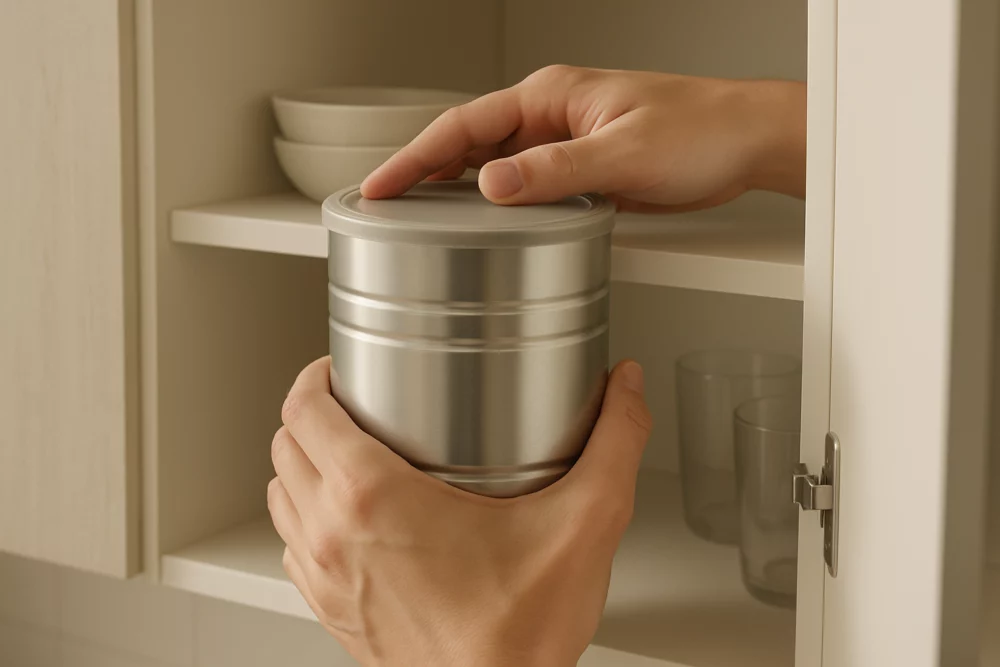
Once opened, manufacturers state a specific period of use, which you will find on the tin or in the preparation instructions. Stick to this guidance, even if the printed date is still a long way off. Write the opening date straight onto the lid so you do not have to guess later on.
The reason for the shorter period is simple: every time you open the tin, air and moisture get in. The powder can clump, lose solubility and go off in terms of flavour. So close the tin again immediately after each scoop.
How can you tell that formula milk has gone off?
Look out for hard lumps, discolouration, a rancid or unusual smell, and damaged, swollen or dented packaging. If any of these signs appear, or if the date has passed, do not use the pack.
Fresh formula powder is loose, evenly pale and dissolves without leaving much residue. Fine compacted bits that break up straight away when you stir are normal. Solid lumps that will not dissolve are a sign that moisture has got into the powder.
Do not rely on your senses alone. A product can look perfectly fine and still no longer deliver the nutrient content stated on the pack. With infant formula, the date is therefore a more reliable criterion than the smell test.
Storing it properly: cool, dry and tightly sealed
Formula powder belongs in a dry place at a steady room temperature, protected from direct sunlight and sources of heat. A closed kitchen cupboard away from the hob, dishwasher and kettle is a good choice.
- Not in the fridge: The moisture in there makes powder clump.
- Not in the bathroom: Steam and temperature swings take their toll on the product.
- Dry scoop: Only use the scoop provided and keep it dry.
- Close the lid: Seal the tin firmly after each scoop and fold foil pouches over neatly.
- Do not decant: Without the original packaging you lose the date, the batch number and the preparation instructions.
If you portion out powder for days out, use clean and completely dry containers and only measure out the amount you need that same day. You will find practical tips on this in our article on baby milk in liquid or powder form.
What applies to milk that has already been made up?
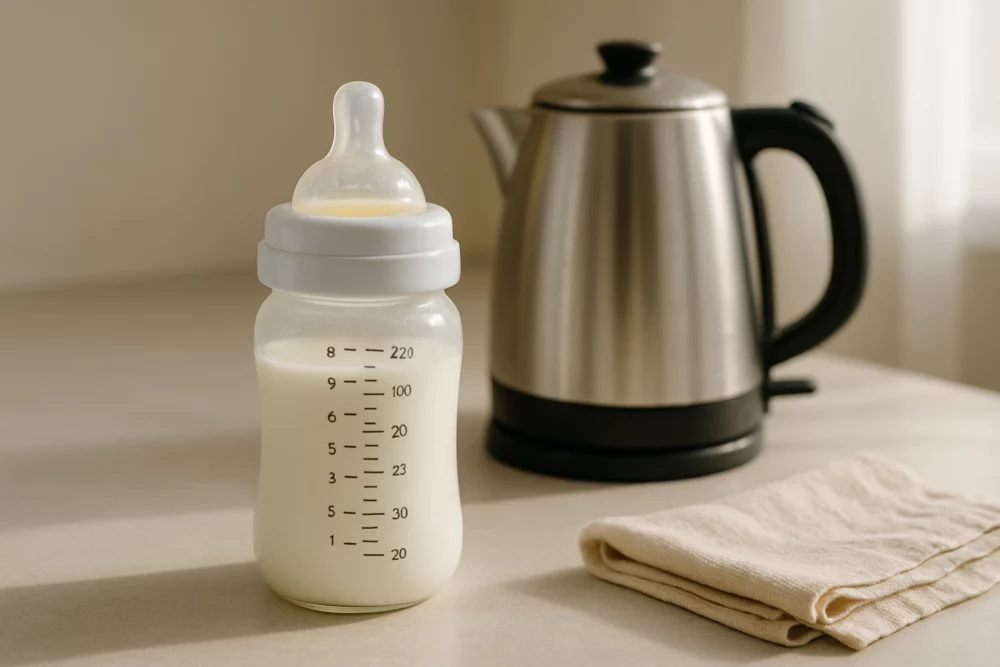
Made up formula milk is an ideal breeding ground for germs and should be mixed fresh and fed promptly. Leftovers in a bottle your baby has drunk from should always be thrown away, never kept.
Prepare the bottle as close to the feed as possible and do not keep it warm for long periods. A bottle warmer running for hours, or a flask of ready mixed milk, are not a good idea. It is better to take hot water separately and stir in the powder once you are there.
For the individual timings on storing and warming, follow the instructions on your pack, as manufacturers’ guidance can differ.
Choosing the right formula for your child
Our premium brands Kendamil, Holle and HiPP cover every stage of your child’s development. We stock the following five stages:
- Pre: from birth, suitable for combination feeding or as the sole source of nutrition.
- Stage 1: from birth, slightly more filling than Pre.
- Stage 2: from 6 months, alongside solid foods.
- Stage 3: from 10 months.
- Stage 4: from 12 months, as a toddler milk.
What to do with expired or leftover formula milk
Expired formula milk belongs in the general waste, not in the bottle and not in a donation either. Opened tins whose period of use has passed should not be passed on either.
To avoid waste, realistic planning helps. Buy as much as you will use within a reasonable time, and put newly bought tins at the back of the cupboard so that older ones are used first. If a change of formula is coming up, plan the switch so that you are not left with a half full tin. We explain what to bear in mind in our article on switching baby formula.
It is also worth checking the date when you buy. In our organic formula milk range you will find the stages and milk bases of the brands we stock, sorted by need.
Good to know
- Two time limits: The printed date applies to unopened products, and once opened the manufacturer’s guidance applies as well.
- Storage matters: Dry, cool and tightly sealed, never in the fridge or bathroom.
- Your senses are not enough: Even powder that looks fine may no longer deliver the stated nutrient content once the date has passed.
- Feed it fresh: Use made up milk promptly and throw away leftovers in the bottle.
- When in doubt, discard: Do not use the product if the packaging is damaged or if there are lumps or a change in smell.
When to speak to your paediatrician
If your baby has accidentally drunk expired or spoiled formula milk and shows any symptoms, contact your paediatrician. The paediatric practice is also the right place to turn to with questions about choosing the right formula, about intolerances or about making a switch.
Talk to your paediatrician
Breast milk is the best nutrition for your baby. Infant formula is an alternative when breastfeeding is not possible or not possible exclusively. Before you change your baby’s formula or introduce a specialist product, please speak to your paediatrician or health visitor.
This article is for general information only and does not replace medical advice.