Warming Baby Formula in the Microwave: What Applies?
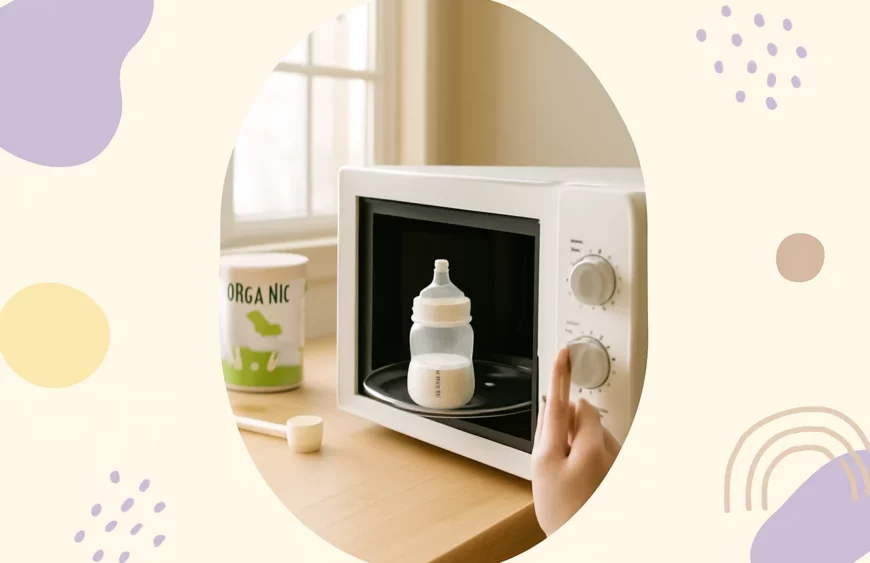
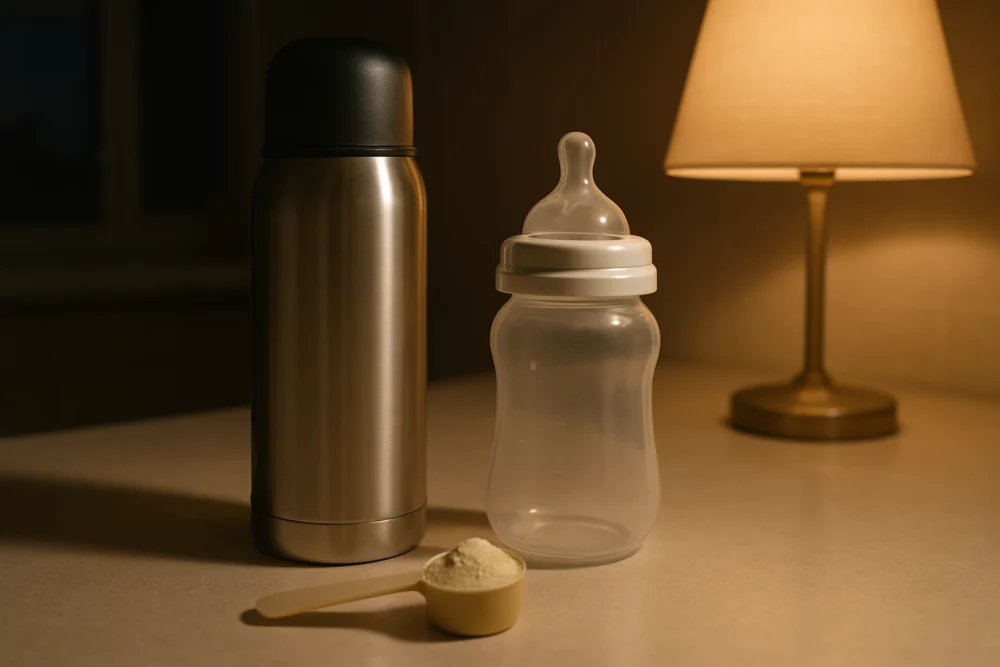
This image was generated using AI.
It is three in the morning, your baby is crying, the bottle is cold, and the microwave is right there. Plenty of parents wonder in that moment whether the quick route is really a problem. Let us look at what happens when you warm a bottle in the microwave and which alternatives work in everyday life.
- The microwave heats liquid unevenly, creating hot zones inside the bottle.
- The temperature of the bottle wall tells you nothing about the temperature of the milk.
- A warm water bath and a bottle warmer heat more evenly and are easier to control.
- Formula milk does not need to be hot, body temperature is perfectly sufficient.
- After warming, always check the temperature on the inside of your own wrist.
What happens to the bottle in the microwave?
Microwaves heat liquid from the inside out, and they do so unevenly. Areas form in the milk that are considerably hotter than the rest, while other spots stay lukewarm. This phenomenon is known as hot spots, meaning localised overheating.
The bottle itself barely warms up, because plastic and glass let microwaves pass through for the most part. So you pick up a pleasantly warm bottle and are still holding milk that may be far too hot inside. That gap between what you feel and what is actually in the bottle is what makes the method risky.
Shaking only helps so much. It does spread the hot spots out to a degree, but whether the milk is then genuinely even in temperature cannot be judged from the outside.
Why do midwives and paediatricians advise against it?
The main reason is the risk of scalding your baby’s mouth and throat, because the actual temperature of the milk cannot be assessed reliably. Talk to your midwife or paediatrician if you are unsure how best to handle preparation day to day.
A second point concerns the formula itself. Strong, localised heat puts more strain on sensitive components in formula milk than gentle warming in a water bath does. You can read up on how a product is composed and which ingredients it contains on the packaging, and our article on understanding baby food labels helps you make sense of it.
Discover our organic baby food
The safe alternatives for warming
The simplest option is a water bath. You place the bottle in a bowl or pan of warm, not boiling water and leave it there for a few minutes. Give it a swirl now and then so the heat spreads evenly.
A bottle warmer works on the same principle, only automatically. It keeps the temperature within a range where the milk does not overheat, then switches off. For parents who often feed at night, that saves a lot of frayed nerves.
Holding the bottle under running warm water works too, though it takes longer and uses a lot of water. When you are out and about, a flask of cooled boiled water remains the most practical solution, as we also describe in our article on baby food for every occasion.
How warm should the milk be?
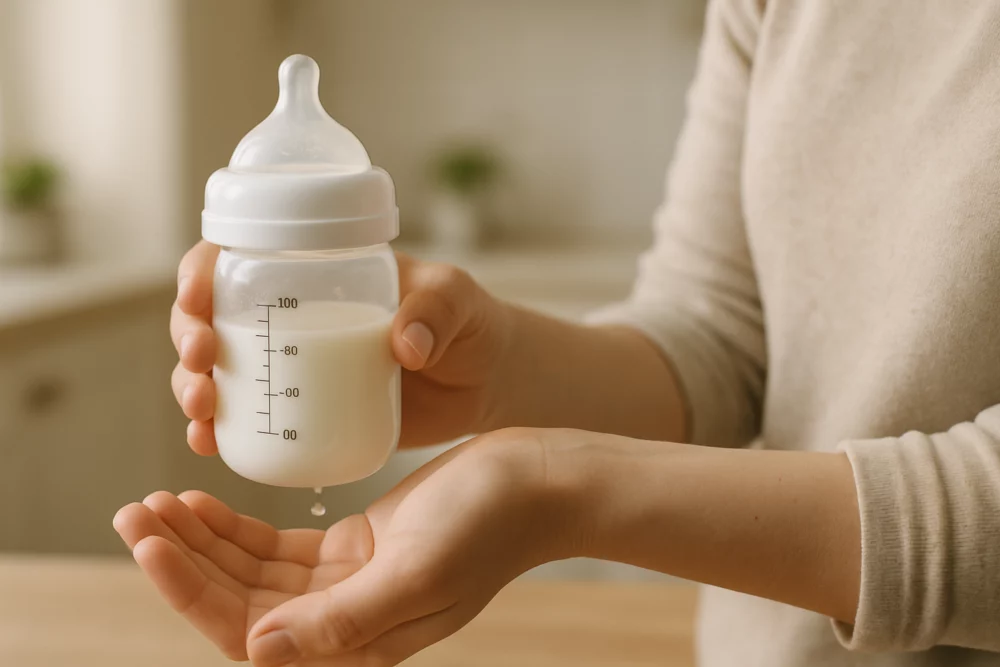
Body temperature is enough. Put a few drops on the inside of your wrist: if you can barely feel the milk there, the temperature is right. If it feels warm, it is too hot.
Does this also apply to breast milk and solid foods?
The same goes for expressed breast milk, which does not belong in the microwave either. Breast milk is best for your baby, and it contains components that react sensitively to strong heat.
With jars and purées the microwave is more commonly used, but hot spots form here as well. If you do use it, stir the purée thoroughly after warming, let it stand briefly and taste it yourself before feeding. The first spoonful calls for patience anyway, and you can read more about that in our article on introducing solid foods.
Does formula milk need to be warmed at all?
No. Many babies drink their bottle happily at room temperature, some even cool. Warm milk is closer to the habit formed during breastfeeding, but it is not a requirement.
What does matter: formula powder is mixed according to the manufacturer’s instructions with boiled water at the stated temperature, so that the powder dissolves and stays low in germs. Only then do you cool it down to drinking temperature. Using cold water to mix is not a shortcut we recommend.
Common mistakes when warming
- Warming twice: Formula milk that has already been warmed and left standing should be discarded, not put back in the warmer.
- Boiling water in the water bath: The bottle gets too hot quickly and then has to be cooled down again, which is a fiddly job.
- Checking the temperature only on the bottle: The bottle wall says nothing about the milk inside.
- Unsuitable containers: Not every bottle and not every teat copes equally well with heat, so check the manufacturer’s guidance.
The right formula milk for young children
Our premium brands Kendamil, Holle and HiPP make sure that newborns and young children are suitably nourished at every stage of development. We stock the following five stages:
- Pre: from birth, suitable for supplementary feeding or as the sole source of nutrition.
- Stage 1: from birth, keeps your baby satisfied a little longer than Pre.
- Stage 2: from 6 months, alongside solid foods.
- Stage 3: from 10 months.
- Stage 4: from 12 months, as a toddler milk.
What to do when time is short
In the evening, boil water and fill it into a flask as well as into a second container that you let cool. At night you mix the two in the bottle to drinking temperature and add the powder. That spares you both the waiting and the microwave.
Ready-to-feed formula is the second option for out and about or for the night. It only needs opening and, if you like, a brief warm-up. In our range of organic formula milk you will find both powder and ready-to-feed versions from Holle, HiPP and Kendamil.
Good to know
- Hot spots: The microwave heats milk in patches, and the temperature cannot be judged from the outside.
- Water bath: Warm, not boiling water heats evenly and is available at any time.
- Wrist test: A few drops on the inside of your wrist show whether the temperature is right.
- Never a second time: Warmed formula milk that has been left standing is not reheated.
- Room temperature is fine: Not every baby needs a warm bottle.
Talk to your paediatrician
Breast milk is best for your baby. Infant formula is an alternative when breastfeeding is not possible, or not possible on its own. Before you change your baby’s formula or introduce a specialist product, please speak to your paediatrician.
This article is for general information and does not replace medical advice.